The door and the glass Part 1 of 4 in this group
The Glass-Door Gasket
The soft seal around the glass door that keeps room air, and its moisture, out of the zones.
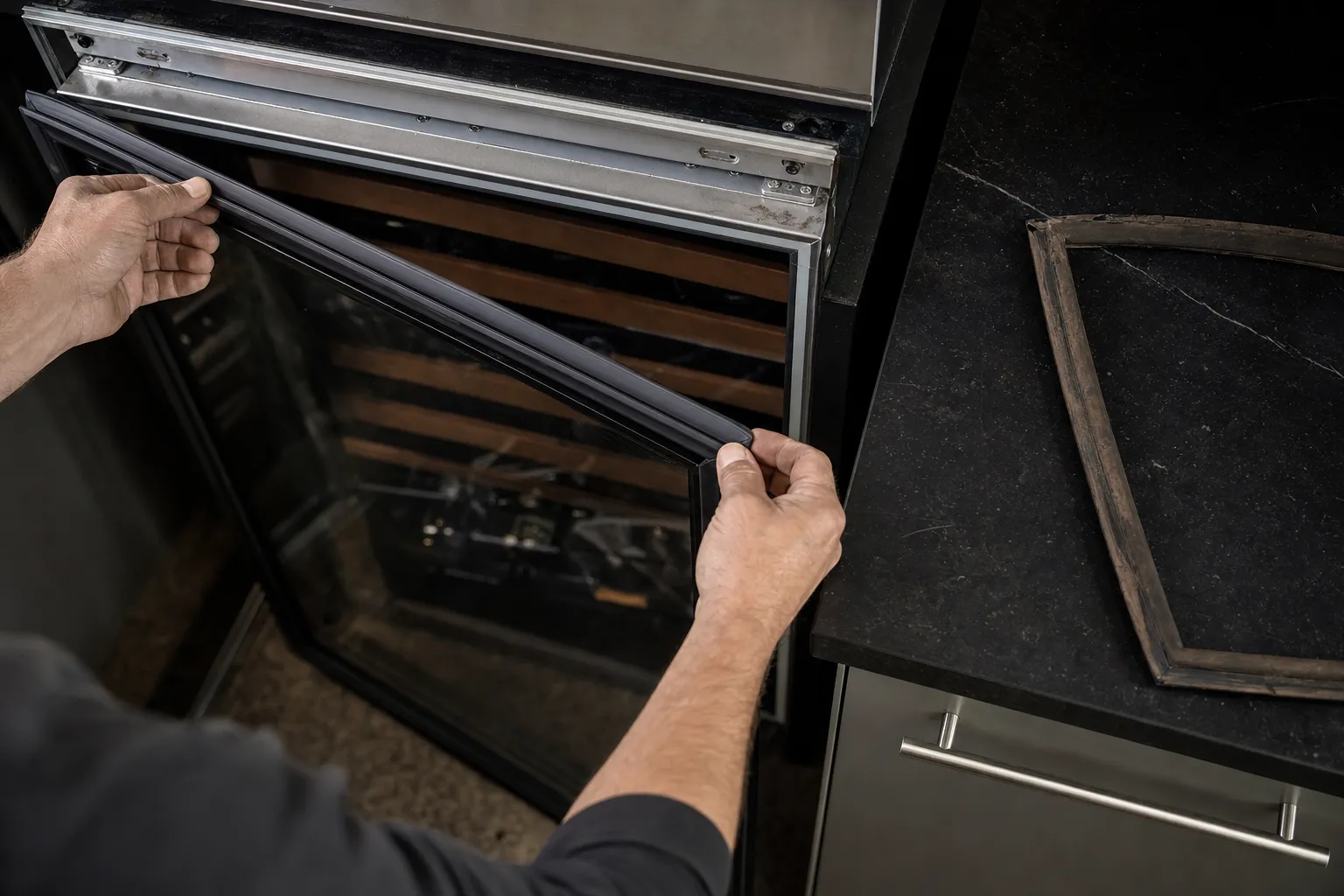
Of all the parts in a wine cooler, the gasket is the one an owner can inspect best. Island remodels set these doors into cabinetry finished to the quarter inch, and a door hung a fraction out of square shows up as water long before it shows up as a number.
What a leaking seal does
Air that slips past a gasket brings its moisture in. Sub-Zero’s undercounter guides list a ripped or torn gasket among the causes of condensation inside the unit, and treat it as a service call rather than a home repair. Inside the cabinet you see fog on the inner face of the glass and beads on the bottles nearest the door; left alone, the same leak frosts the coil and keeps the unit running longer than it used to. The note on fogged glass explains how to tell that inside moisture from the harmless fog that forms on the room side.
Checking it yourself
Open the door and run your eye and fingertips around the whole seal, corners especially, feeling for splits, flattened stretches and rubber gone hard. Then shut the door on a strip of paper at several points and draw it out: it should drag evenly all the way round. Clean the seal the way Sub-Zero’s guides describe for interior surfaces, with mild soap, water and baking soda, rinsed and dried; they rule out vinegar, rubbing alcohol and other alcohol-based cleaners.
Seal or door
A door that has sagged on its hinges, or a rack pulled a little too far forward, can hold a perfectly good gasket off the frame along one edge. New rubber would change nothing, so the door’s fit is checked first; the note on how a glass-door gasket fails goes further into the patterns. When the seal itself is worn out, a genuine gasket for the model is fitted as a wine storage repair.