Lake Air Note 3 of 7
Damp Labels and Mold Inside Wine Storage
- Written by
- Bjorn Aaltonen
- Bench
- wine storage and dual zones
- Years in the trade
- 15
- Refrigerant
- EPA 608 certified
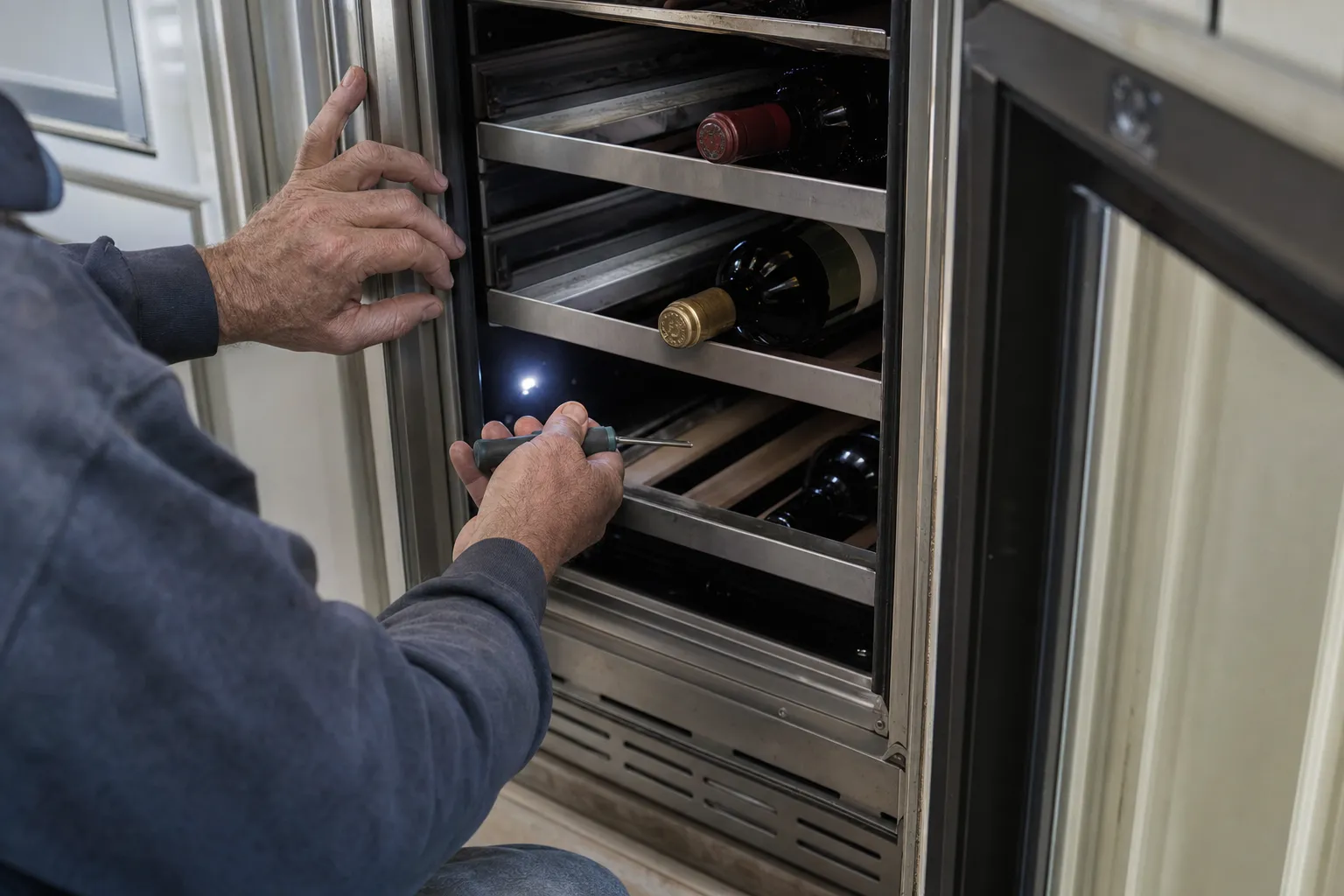
Labels that have gone soft, grey spots on a capsule or a rack front, and a stale smell when the door opens all say the same thing: the cabinet is holding more moisture than it should. On Mercer Island that moisture usually arrives from outside the unit, carried in on lake air through a door that no longer shuts tight or one left open while a table is being cleared.
A wine fridge rarely makes damp by itself. Close the way in, clean the cabinet out properly, and the damp has nowhere left to come from.
What the cabinet does with moisture
Wine storage is meant to be neither dry nor wet. Sub-Zero says the dual evaporators in its wine units, one for each storage zone, keep the humidity steady and moderate. In practice the coils do that by collecting moisture from the cabinet air as they cool it, and the water they collect leaves by the unit’s own drain route.
That balance holds as long as little outside air gets in. It breaks in three ways: room air entering faster than the coils can take moisture out of it; a cabinet that has warmed because it is not cooling properly, so the coils stop drying anything; and wet things being put inside.
Reading where the damp is
Where the damp sits tells you which of the three you are dealing with.
Damp labels near the door and dry ones at the back point to air coming in at the door. The door may not be swinging shut on its own, a bottle or a rack front may be holding it off the seal, or the glass-door gasket may have hardened or split along one side.
Damp everywhere, with bottles that feel warmer than they should, points to a cooling fault first. A warm cabinet full of wet air is not a seal problem, and no amount of cleaning will fix it.
Damp on a few bottles only, often the ones that went out to the table, is usually the bottles themselves. A cold bottle sweats in a warm room, and put back wet, it carries that water in with it.
A party is its own case. A door propped open while bottles go back and forth lets in far more lake air than a day of ordinary use, and the damp from that evening can linger well after the guests have gone.
Cleaning it out the way Sub-Zero describes
Unload the zone first. If the bottles will be out for a while, the One Bridge note on protecting a collection covers where they can wait and in what order to move them.
Sub-Zero’s undercounter use and care guides give one mix for interior surfaces and removable parts: a mild solution of soap, water and baking soda, rinsed off and dried thoroughly, with water kept away from the lights and the control panel. They rule out vinegar, rubbing alcohol and other alcohol-based cleaners on any interior surface. Dry the racks and their wooden fronts as carefully as the walls; mold favors the corners a cloth skips.
Leave the door open until everything is dry, then reload, putting only dry bottles back.
When the mold comes back
If the spots return after a thorough clean, the way in is still open. On the visit we look at how the door closes and seals along its full length, probe each zone against its display, check that both zones are genuinely cooling, and follow the meltwater route to make sure it is leaving the cabinet. A worn seal, a door that has dropped and a zone that has stopped cooling are all repairable under wine storage repair, and each is priced once we know which one it is.
Before you call
-
Step 1
Note where the damp and the smell are
Front or back, upper zone or lower, a few bottles or all of them. The pattern tells us more than the amount does.
-
Step 2
Dry bottles before they go back
A bottle brought back from the table has usually sweated in the warm room. Wipe it dry before it returns to the rack, label included.
-
Step 3
Unload, then wash with soap and baking soda
Sub-Zero's mix for interior surfaces is mild soap, water and baking soda, rinsed and dried thoroughly. Keep water off the lights and the control panel, and use no vinegar or alcohol-based cleaner.
-
Step 4
Watch the door close by itself
Open it partway and let go. It should swing shut and seat on its own, with no bottle or rack front in its path.
Past these checks the fault is inside the machine. Call Mercer Island Sub-Zero Service on (206) 208-3377 and say which step changed nothing.
Asked about this
Can we use vinegar or a stronger cleaner on the mold?
Sub-Zero rules out vinegar, rubbing alcohol and other alcohol-based cleaners on interior surfaces, and gives a mild mix of soap, water and baking soda instead. It recommends nothing stronger. A wine cabinet is a closed box full of corks and paper labels, so we would keep to the manufacturer's mix, rinse it off and dry every surface thoroughly.
Only the labels near the door are damp. What does that point to?
Air getting in at the door. The door may have stopped swinging shut on its own, something inside may be holding it off the seal, or the gasket may have hardened along one side. Mercer Island Sub-Zero Service, (206) 208-3377, checks the closing and the seal together, and that is usually where the answer turns up.
Should we seal the wooden rack fronts to protect them from damp?
We would not. In its guide for the UC-24 undercounter models, Sub-Zero says the cherrywood facings on the wine racks can be stained or sealed, but warns that some of those substances are hazardous and may damage stored wine. Stopping the damp at the door protects the wood better than any coating, and it protects the labels as well.